| Frequently
Asked Questions
What is a percolation test?
A
percolation test, also called a perc test, is a test to determine the suitability
and absorption capability of the soil for a septic system drain field also called
an Onsite Wastewater Treatment System.
Why do I need a percolation
test?
If a sewer system is not available, a code compliant method for disposing
of effluent is essential and required. A successful percolation test enables the
design of an Onsite Wastewater Treatment System.
How long does it take
to complete the percolation testing and the report?
Typically, the scheduled
time for testing and completing the report is two to three weeks after receiving
the signed contract and the retainer fee. However, depending on our workload and
other circumstances, this time frame may vary.
What is the difference
between a conventional and a non-conventional Onsite Water Treatment System?
A
conventional Onsite Wastewater Treatment System has percolation rates of more
than five (5)
minutes per inch and less than 60 minutes per inch for leach
lines, leach beds and infiltrative chambers type sewage disposal systems. For
seepage pits, absorption rates that exceed 5.12 gallons per square foot of dispersal
area per 24 hours or less than 0.83 gallons per square foot of dispersal area
per 24 hours do not meet the minimum requirements for conventional Onsite Wastewater
Treatment System.Properties not capable of supporting a conventional Onsite Wastewater
Treatment System must secure approval from the regulating agency to install a
non-conventional Onsite WastewaterTreatment System.
Example
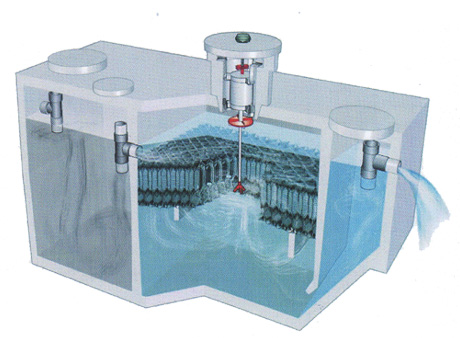
of a Residential Wastewater Treatment Plant:
 Other Helpful information
Diagram
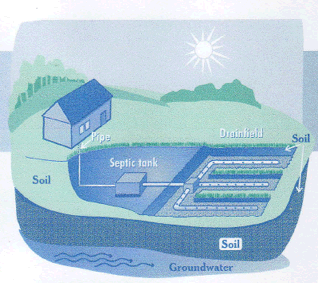
of typical Septic System
Schematic
of a Seepage Pit 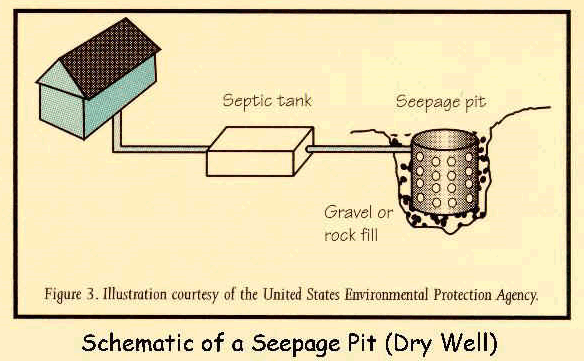
Video
Explaining How a Septic System works
|